

How Eagle National Steel Prevents Steel Surface Defects and Ensures Quality
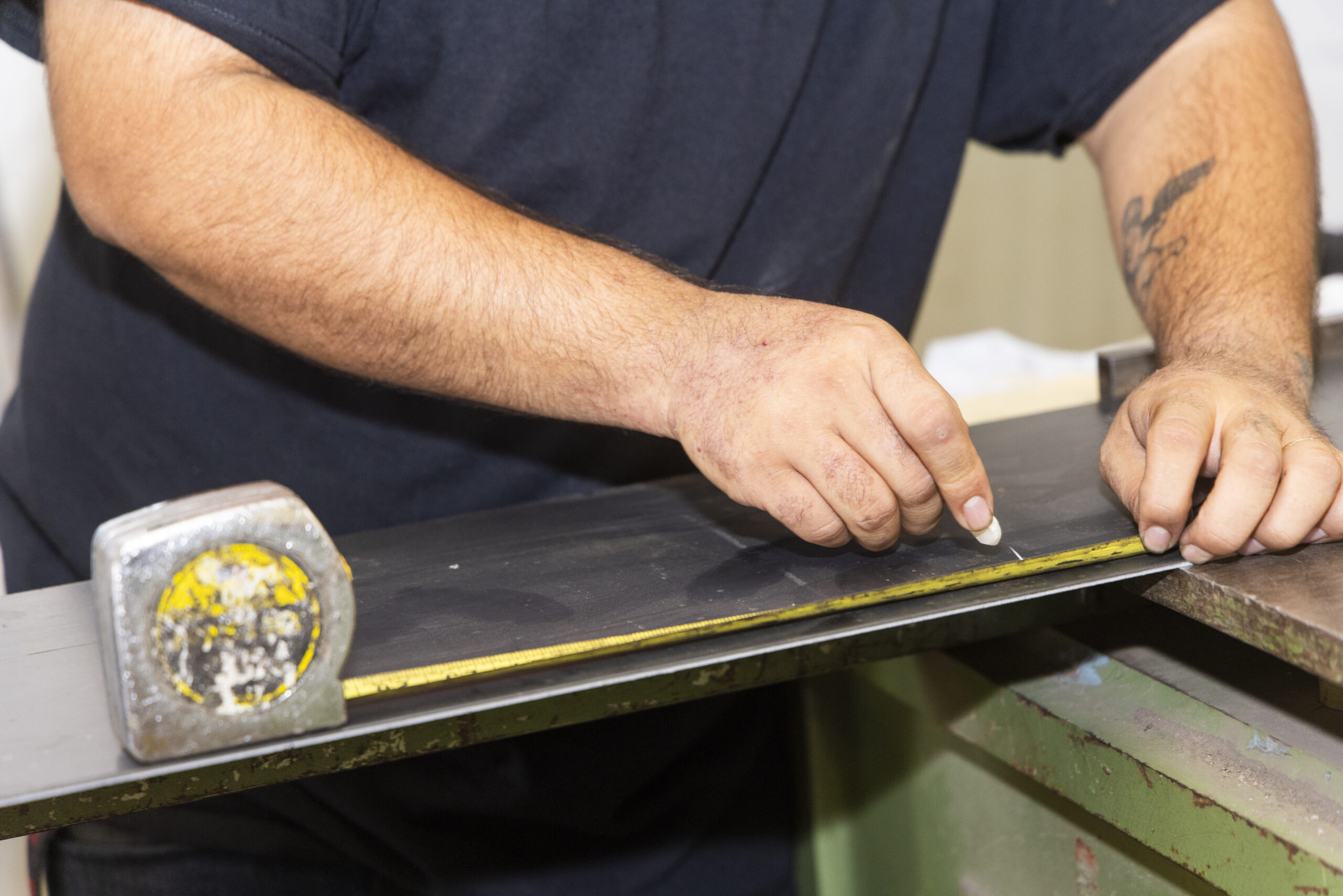
Surface defects are relatively common in steel plate, sheeting, and tubing. These products are made from mild carbon steel, which is more susceptible to deformation than its high-carbon counterparts. Defects usually arise during manufacturing and may go unnoticed without proper quality control.
If you’re lucky, a defect will only cause cosmetic issues. If you’re not, defects can lead to welding problems and corrosion. That’s why it’s always a good idea to remove defective steel from the production line, ensuring it never reaches the customer.
Common Steel Defects to Look Out For
So what causes defects in steel? Imperfections that arise during casting are referred to as primary defects. Those that occur during processing are known as secondary defects. Poor temperature control is a common cause of defects, especially in hot-rolled steel. Impurities in raw materials, improper storage conditions, and rough transportation can also lead to defects.
Types of Common Steel Defects
Some of the common defects in steel products are:
- Cracks: Can be visible or internal and compromise the steel’s structural integrity
- Scabs and laps: Raised bumps and ridges that can break off.
- Blisters: Bubbles caused by trapped gas that can create pits when they pop
- Scratches: Cosmetic marks caused by improper handling
- Porosity: Air pockets inside the steel that can cause corrosion
- Inclusions: Particles of non-metallic material stuck inside the steel that cause weak points
- Roll marks: Bumps or indentations caused by dirty rollers in hot or cold rolling
- Scale: A flaky layer of oxidation that can develop during hot rolling
- Laminations: Internal separations between layers of rolled steel
- Deviation: Inconsistent dimensions across products
How We Prevent Defects in Our Steel Products
Eagle National Steel is committed to delivering defect-free steel. We follow a rigorous quality control process and continually improve our steelmaking methods to ensure high-quality outcomes that are free from imperfections.
Precision Manufacturing
Advanced machinery enables us to control every factor in the steelmaking process, including temperature, rolling direction, and alloy composition. This way, we can produce steel to strict mechanical specifications without deviation. We automate where possible to reduce human error and ensure each stage of production is more consistent. Whether you order a simple steel strip or a structural steel beam, you receive the same quality manufacturing throughout.
Rigorous Quality Testing
Quality control is performed at different stages of steel production. We inspect every batch of steel for porosity, cracks, and other defects using non-destructive testing methods such as:
- Visual testing: Identifying surface defects visible to the naked eye
- Ultrasonic testing: Using sound waves to measure steel thickness and detect imperfections
- Magnetic particle testing: Using magnets to identify cracks and non-metallic inclusions
Heat Treatment Control
Many defects that appear on the surface of the steel are the result of temperature stress. We utilize industrial monitoring technology to precisely regulate heat levels, which ensures even cooling and prevents cracks. Degassing the furnace is also essential – this prevents air from being trapped in molten steel, which can cause blisters and porosity later.
Skilled Workforce
Defects can often be avoided by removing human error from the equation. Automating repetitive tasks is helpful, but many processes still require human intervention. We only employ experienced metallurgists and engineers who can quickly identify and rectify production issues that could lead to defects. Our technicians are proactive in maintaining quality control and undergo regular training to keep their knowledge current.
Continuous Improvement
We don’t just get into a groove and stay there. Our production process is continually improving as we adapt to evolving quality requirements and embrace new technologies. If surface defects are identified, we conduct an analysis to determine the root cause of the problem and prevent it from recurring. We build feedback loops based on previous production data to help us monitor our performance daily.
Material Traceability
Tracking the origin of our raw materials can help us identify impurities in a batch of steel before they can cause defects, which can help with recalls if something ever falls through the cracks. We also track processing conditions and communicate with our own suppliers when changes are needed. This helps everyone produce higher-quality outputs and yields better steel products for the customer.
Compliance and Standards
We produce structural steel and sheet metal in accordance with ASTM International standards for quality and mechanical properties. These standards have a limited tolerance for surface defects, enabling us to produce consistent products with minimal variation in size and material composition. This is how we guarantee the strength and durability of our steel.
Some of the standards we follow:
- ASTM A568: Outlines quality requirements for rolled steel
- ASTM A370: Dictates how to test for internal cracking and defects
- ASTM A1011: Provides maximum acceptable defect levels for structural steel
- ISO 9443: Provides maximum acceptable defect sizes for hot rolling
Visit Our Steel Yard in Hutchins
Would you prefer to inspect our steel products for yourself? Visit us in Hutchins, Texas, and explore our 150,000-square-foot showroom to find the right steel for your project. Whether it’s for construction, manufacturing, or DIY, we have something to suit your specifications. For more information, please contact us.