

10 Must-Have Welding Supplies for Beginners
If you’ve never handled a torch before, taking up welding as a hobby may seem daunting. But, at its core, welding is an ancient craft based on relatively simple principles: to join two pieces of metal together using heat and a filler metal. With the right beginner welding supplies, you can create something incredible.
The basic welding supplies for beginners include a welding machine or welder, welding rods or welding wire, a suitable work surface, and proper hand and face protection. Let’s break down how to build your welding toolkit.
Types of Welding Beginners Should Know
Before you can determine which type of welding machine to buy, you’ll need to determine the type of welding you plan to do. The four main types of welding are MIG welding, TIG welding, stick welding, and flux core welding. Stick welding supplies are more affordable and can help beginner welders develop more versatile skills, but MIG welding is the most common type of welding and the easiest for beginners.
- Stick welding: Stick welding uses electrodes known as welding sticks or welding rods. The electrode is a stick of filler metal covered in flux, which burns up as you weld. It’s suitable for all-purpose metalwork and repairs. The flux residue (slag) must be scraped away from the finished seam.
- Flux core welding: Instead of a stick, the flux-covered electrode comes in a spool of wire that you feed through your welding torch. Just like stick welding, the flux burns as you weld and leaves a residue called slag, which you should clean from the seam.
- MIG welding: MIG welders are equipped with a gas cylinder that releases gas as you weld, making them different from stick and flux-core welders. The gas does the same job as flux in a stick welder: It protects the freshly welded metal from contamination.
- TIG welding: Like MIG welders, TIG welders rely on gas to protect the metal. However, they are not fed by welding wire. Instead, you melt a rod of solid filler metal using the torch tip’s built-in electrode. TIG is best for intricate projects and welding aluminum — it is the most challenging type of welding to learn.
Essential Welding Equipment for Beginners
Welding Machine
Your welder is the most essential item to buy as a beginner. Choose a trusted brand like Hobart, Miller, or Lincoln Electric, especially if you’re looking for a product that will last for many years. Consider the following when buying your first welding machine:
- The type of welding you want to do (stick, MIG, TIG, or flux core)
- Quality and size of gas cylinders and regulators
- Power supply – check whether it plugs into 120V or 240V outlets
Electrodes and Filler Metal
Electrodes conduct electricity through your welding torch to create an arc that can melt metal. The type of electrode you use will depend on the type of welding you’re doing.
- Stick welding: Requires consumable electrodes, also known as welding rods.
- MIG and flux core welding: Require welding wire (MIG wire or gasless flux wire).
- TIG welding: Requires solid rods of filler metal. The reusable tungsten electrode should be built into the torch.
Welding Table
You can purchase a steel welding table and cart or make your own. The surface should be large enough to hold what you’re working on, plus a bit more space. If you don’t have the space for a permanent setup, consider a knockdown table. Remember to use thick steel for the tabletop and leave space underneath for airflow.
Welding Clamps
Using clamps to hold metal workpieces together can make welding significantly easier, especially for beginners. You can use regular C clamps, but ensure they’re all-metal and don’t have plastic or rubber grips. You could also use magnetic clamps, which are ideal for welding at unusual angles.
Welding Helmet
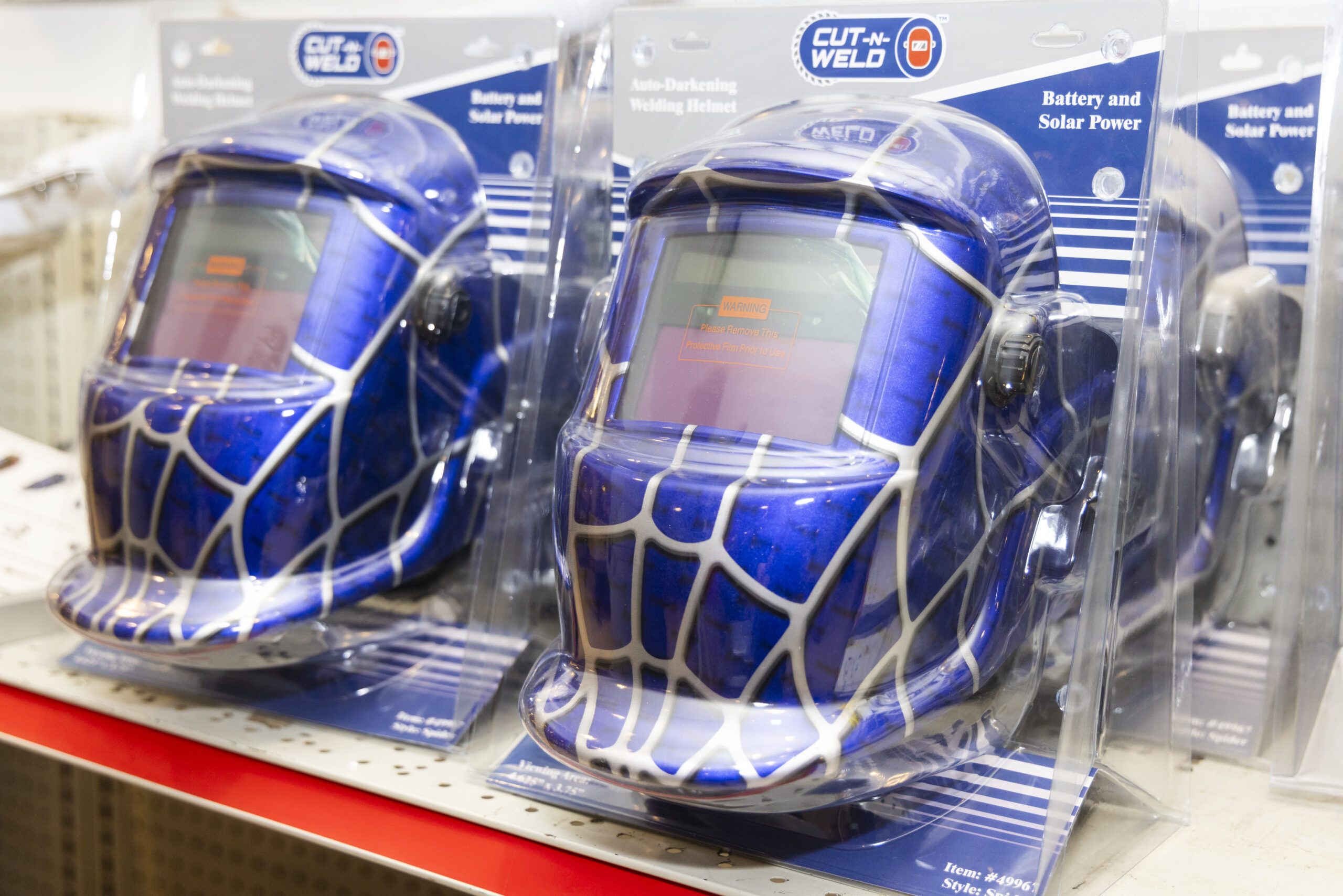
Welding helmets protect your face and eyes from damaging UV rays and protect your skin from accidental burns. Auto-darkening helmets adjust the lens darkness according to the light radiation from your torch. These tend to be more expensive, so consider browsing second-hand options if you’re on a budget. Remember to wear safety glasses under your welding helmet.
Welding Gloves
Gloves protect your hands against burns, and there are different types of gloves for each welding task. Stick welding gloves tend to be thicker than TIG or MIG gloves to protect against splatter, which is more likely with stick welding techniques. TIG gloves are designed for dexterity and may be made from thinner, lighter leather. MIG welding gloves sit somewhere in the middle, providing a mix of protection and dexterity.
Welding Jacket
Wearing a welding jacket over your clothes protects exposed skin from splatter and UV exposure. Welding jackets are usually made from leather, suede, Kevlar, or fire-treated cotton.
Wire Brush
Having a wire brush on hand can help you prep your metal for a cleaner weld. You can use it to remove paint, dirt, and rust before welding, or to remove slag and spatters. Brushing off your finished weld helps smooth the surface and prepare it for grinding.
Chipping Hammer
A chipping hammer is essential for stick welding. You’ll use it to break off the hardened flux and clean up your finished seams once the metal has cooled.
Angle Grinder
Having an angle grinder in your toolkit makes prep work and finishing easier, but if you don’t have one, you can use a metal file for smaller smoothing jobs. An angle grinder can be used to cut metal to size before welding or to grind down welded seams to make them smooth and even.
Buying a Welding Starter Kit vs. Building Your Own Kit
Benefits of a Welding Starter Kit
Welding starter kits are a great solution for beginners looking to kickstart their welding journey. These all-in-one welding kits typically include essential tools such as a welder, welding helmet, gloves, and a variety of welding rods or welding wire. Ideal for those new to the craft, welding starter kits offer everything you need to get started with basic welding projects.
While welding kits for beginners can save you time and effort, they do come with some trade-offs. You may not have the freedom to choose specific welding tool brands or types, and in some cases, the kit may contain accessories you don’t need. Additionally, some beginner welding starter kits could offer more equipment than required for your first projects, making it harder to focus on exactly what you need.
Creating a Custom Welding Kit
For those not ready to invest in a full welding kit, building a custom welding toolkit is a cost-effective alternative. By gradually selecting individual pieces of welding equipment, such as welding helmets, gloves, or welding rods, you can tailor your toolkit to suit your specific needs and budget. Whether you’re tackling small welding projects or advancing to larger ones, building your toolkit over time can ensure you only buy what’s necessary for your welding goals.
Eagle National Steel Has the Welding Supplies You Need
Looking for high-quality welding equipment for beginners? Visit Eagle National Steel in Hutchins, TX, or order welding supplies by phone. For more information, please contact us.