

Hot Rolled vs. Cold Rolled: Which Rolled Steel Is Best?
Steel is one of the most versatile materials used in construction, manufacturing, and fabrication. But when it comes to choosing the right type of steel, it’s important to understand how the steel is made — and how that process impacts performance and cost.
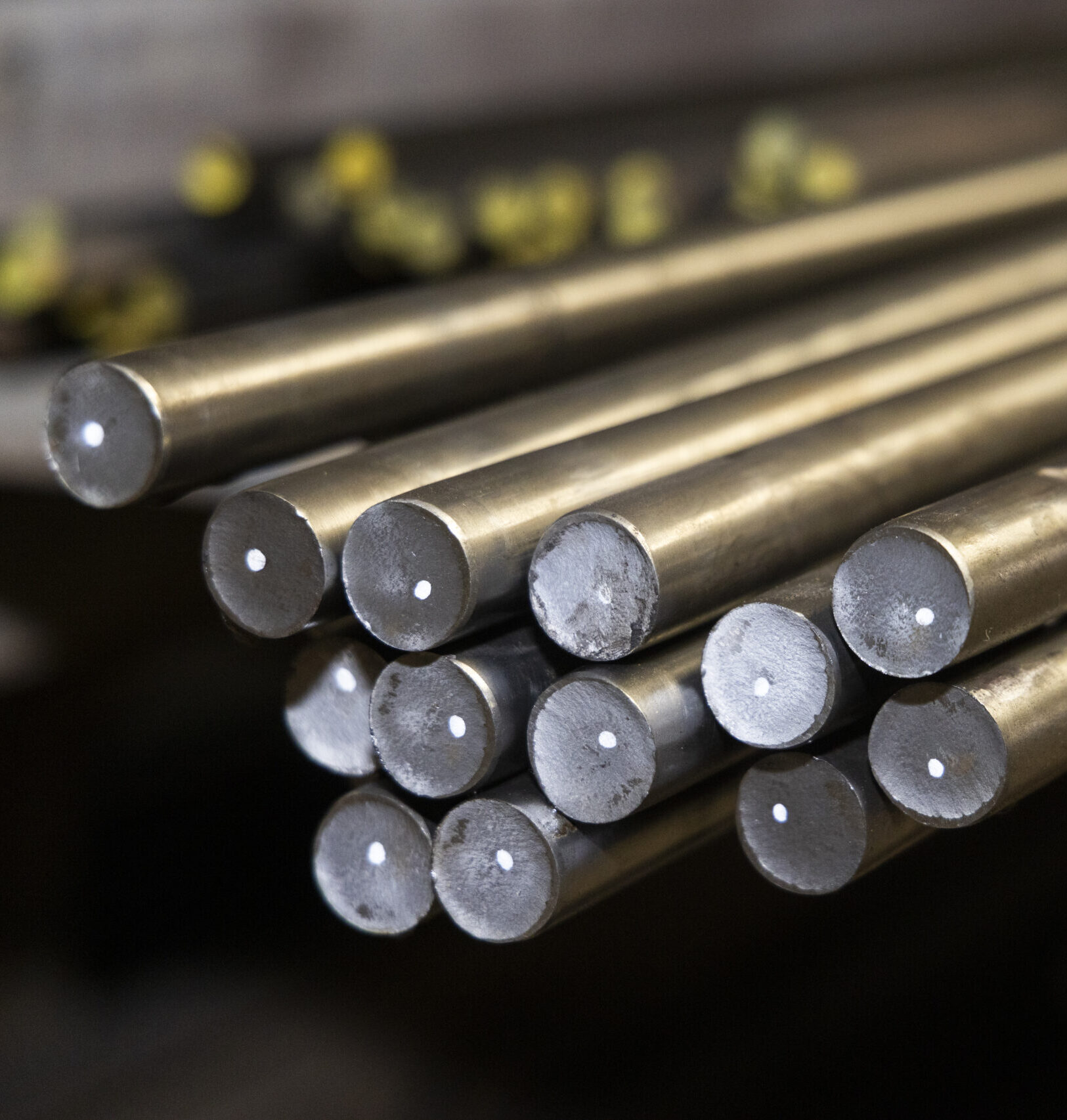
Two of the most common options are hot rolled rounds and cold rolled rounds. While both are widely used in steel production, they differ in their rolling process, finish, and ideal applications.
Here’s what you need to know about each, and how to choose the right material for your project.
What Is Hot Rolled Steel?
Hot rolled steel is formed by heating steel above its recrystallization temperature and shaping it while it’s still at high temperatures. This allows the material to be easily formed and resized without resistance.
Because it’s processed well above room temperature, the steel can be rolled into larger sizes and shapes with less effort during manufacturing.
Common Uses for Hot Rolled Steel Rounds
Hot rolled rounds are often used in:
- General fabrication and repairs
- Heavy equipment and structural components
- Agricultural and industrial applications
- Transportation components, including railroad tracks
- Artistic and decorative metalwork
They are especially useful when precise dimensions are not critical.
Advantages of Hot Rolled Steel
- Easier to shape during the hot rolling stage
- More cost-effective for large-scale projects
- Ideal for welding, cutting, and forming
- Suitable for a wide range of steel grades and applications
Because of the nature of the rolling process, hot rolled steel typically has looser tolerances and a rougher surface finish compared to cold rolled options.
What Is Cold Rolled Steel?
Cold rolled steel starts as hot rolled material but undergoes additional processing at or near room temperature. This secondary process improves strength, accuracy, and finish.
Unlike hot rolling, cold rolling involves compressing the steel into more precise shapes, often followed by processes like annealing to enhance its properties.
Common Uses for Cold Rolled Steel Rounds
Cold rolled steel rounds are frequently used for:
- Shafts, pins, and axles
- Dowels, slides, and fixtures
- Precision components in machinery
- Appliances and consumer products
- High-performance applications, including aerospace
These applications benefit from tighter tolerances and improved consistency.
Advantages of Cold Rolled Steel
- Smoother, more refined surface finish
- Greater dimensional accuracy and tighter tolerance control
- Improved tensile strength and durability
- Better performance for machining and fabrication
Cold rolled steel is often the preferred choice when the finished product requires precision and a clean appearance.
Key Differences Between Hot and Cold Rolled Steel
While both materials serve important roles, the differences come down to processing, performance, and application.
1. Temperature and Processing
- Hot rolled steel is formed at high temperature conditions above the recrystallization point.
- Cold rolled steel is processed closer to room temperature for added precision.
2. Surface Finish
- Hot rolled steel is rougher, with a scaled finished surface.
- Cold rolled steel is smooth, with uniform surface finishes.
3. Tolerances and Accuracy
- Hot rolled steel has looser tolerances.
- Cold rolled steel offers tight tolerance control for precision work.
4. Strength and Properties
- Cold rolled steel typically offers higher tensile strength.
- Hot rolled steel is easier to form and weld.
5. Applications
- Hot rolled steel is well suited for structural, industrial, and large-scale projects.
- Cold rolled steel is best for precision parts, appliance components, and detailed fabrication.
When Should You Use Each Type?
Choosing between hot rolled steel and cold rolled steel depends on your project’s requirements.
Choose Hot Rolled Steel If You Need:
- Cost-effective material for large builds
- Flexibility in shaping and forming
- Structural components where appearance isn’t critical
Choose Cold Rolled Steel If You Need:
- Tight tolerances and consistent dimensions
- Smooth surface finish for visible applications
- Enhanced performance for machining and detailed fabrication
In many cases, both materials may even be used together depending on the design and function of the project.
Find the Right Rolled Steel at Eagle National Steel
At Eagle National Steel, we carry a wide range of hot rolled and cold rolled rounds to support all types of fabrication and construction needs.
Whether you’re working on heavy-duty industrial builds or precision components, our team can help you select the right rolled steel for your application.
Visit our showroom in Hutchins, TX, or give us a call to place your order. We’re here to make sure you get the right material every time.